Where Halloween Came From
Halloween did not come from one place, religion, culture or century. Trace the traditions, beliefs and transformations that accumulated into the October 31st we know today.
Halloween has always been my favorite time of the year. Not only when I was growing up, but well into my adulthood. I was fortunate enough to experience Halloween in the 90s which was, in my opinion, the best time for Halloween. Aside from my fascination with Halloween as a holiday, the history is also something that I am interested in.
Halloween is observed on October 31st, which is the evening before the Christian feast of All Saints' Day. The word Halloween comes from All Hallows' Eve which essentially means the evening before All Hallows. All Saints' Day falls on November 1st followed by All Souls' Day on the 2nd commemorating the faithful departed. These observances form part of the Christian period commonly called Hallowtide. Don't worry, this won't be all about Christianity but it does play a big role. Modern Halloween cannot accurately be attributed to one source though. Historian Nicholas Rogers describes its history as involving Celtic and Christian ritual, followed by substantial transformation in Britain, Ireland and North America.
Halloween therefore isn't simply an ancient pagan festival that survived unchanged for thousands of years. Modern Halloween combines traditions accumulated during different periods such as Samhain and Gaelic seasonal traditions, Christian Hallowtide, British and Irish folk practices, beliefs surrounding spirits and the dead, divination and courtship traditions, disguising or guising, mischief, immigration to North America, American parties and community celebrations, trick-or-treating, commercial candy and costumes, and horror entertainment. I'm sure I missed something but the point is that the Halloween we know today is a melting pot of many different traditions. Halloween was assembled over centuries rather than invented at one moment.
Samhain was a Gaelic festival associated with the end of summer and beginning of the darker part of the year. The name is commonly translated as "summer's end." Samhain occurred around the beginning of November. It represented an important seasonal boundary. The agricultural year was moving from summer and harvest toward winter. This seasonal transition helped give Samhain associations with liminality, a boundary period between one state and another. Samhain appears prominently in medieval Irish literature. Supernatural encounters are associated with Samhain in Irish tradition. Later folklore surrounding the period contains beliefs involving spirits and supernatural beings. Fire was an important component of Samhain traditions. Rogers argues that Samhain contributed a supernatural or liminal character to what eventually became Halloween. However, Rogers makes an important distinction that many specific Halloween customs did not simply descend directly from documented Samhain rituals. He argues that much of the ritual behavior later associated with Halloween developed alongside the medieval Christian festivals of All Saints and All Souls.
All of that makes it sound like Halloween was originally Samhain and that Samhain was the Celtic version of Halloween or that modern Halloween is a 2,000 year old Celtic holiday but historians don't actually have evidence of this. It is safer to say Samhain was an important influence or ancestor of Halloween. Halloween's supernatural character has connections with Samhain, while many actual customs developed later. Another commonly repeated claim is that the Christian church deliberately moved All Saints' Day to November 1st specifically to replace Samhain. Rogers points out a problem with that neat explanation, medieval Christian commemorations of saints varied geographically, and Ireland itself observed a saints' commemoration in April, which complicated the idea of a straightforward Christian takeover of Samhain. Another frequently repeated origin theory connects Halloween with the Roman festival of Pomona. Rogers notes that folklorists have proposed Roman connections, but Samhain is the much more common historical association. The evidence supports something more interesting than "Halloween is Samhain," Samhain supplied part of Halloween's atmosphere; later centuries supplied many of its customs.
Halloween's name is Christian, regardless of how much older seasonal folklore influenced the holiday. Hallow means a holy person or saint and All Hallows is All Saints. The evening preceding All Hallows became All Hallows' Eve and over time the name contracted into Hallowe'en or Halloween. All Saints' Day commemorates saints and All Souls' Day became associated with commemorating and praying for the dead. Historically, prayers for souls in purgatory formed part of All Souls observance. The sequence became; October 31st as All Hallows' Eve, November 1st as All Saints, and November 2nd as All Souls. This placed Halloween directly beside Christian observances concerned with saints, death and departed souls. Consequently, medieval and later Halloween traditions shouldn't automatically be classified as surviving pagan practices merely because they concern death or spirits.
Early Christian commemorations originally focused particularly on martyrs. Different Christian communities commemorated martyrs or saints on different dates. Rogers notes a Roman observance on May 13th in the fourth century. November 1st eventually became the Western date for All Saints. The historical development was therefore gradual rather than "the pope invented Halloween." Popular history in the Library of Congress notes that Pope Gregory III designated November 1st as a time to honor saints during the eighth century.
Just to be clear, I'm not stating that Christianity simply replaced Samhain with Halloween. The evidence supports a process of traditions overlapping, interacting and changing over centuries.
Both Samhain related folklore and Christian Hallowtide placed unusual emphasis on death and transition. The seasonal environment reinforced this with; harvest ending, daylight decreasing, winter approaching and vegetation dying back. In earlier agricultural societies winter had obvious connections with scarcity, danger and death. Halloween therefore developed at the intersection of seasonal transition, religious commemoration of the dead and supernatural folklore. This helps explain why ghosts became such a durable part of Halloween even as the holiday became increasingly secular. The history of ghosts is actually quite interesting as well, maybe I will write something on that at some point. The Library of Congress describes Halloween as rooted in both Christian and pagan festivals, with themes connecting seasonal and life cycles.
Door to door Halloween activity did not originate with American children asking for candy bars. Several older European customs resemble components of modern trick-or-treating. There was another tradition called souling. People went from house to house and received food in connection with prayers for the dead. Another was guising, appearing in disguise or costume while visiting houses. Guisers could perform songs, jokes, verses and other little performances. Food for gifts could be given in return and while these traditions are not identical to modern trick-or-treating, they provide important precedents for costumes, visiting houses, performing or requesting and receiving food. The Library of Congress notes that guising evolved toward secular performances involving songs, jokes and "tricks." The Library of Congress also identifies another possible influence on American trick-or-treating; belsnickeling, which is a German-American Christmas custom. In that practice, disguised children visited neighbors and adults attempted to identify them. In one version, children received food or treats if their disguises successfully concealed their identities. Because multiple customs resemble trick-or-treating that doesn't mean that modern trick-or-treating has one proven direct ancestor.
Fortune telling was once a huge part of Halloween. Around the late 19th and early 20th centuries, American Halloween was heavily associated with courtship and divination. Halloween parties contained games supposedly capable of predicting whom someone would marry, whether they would marry at all, characteristics of a future spouse and romantic fortunes. Apples, nuts, mirrors and other household objects appeared in various divination traditions. Historical newspaper coverage treated matrimonial fortune-telling as a recognizable Halloween subject. The Library of Congress Chronicling America guide specifically notes a 1907 Los Angeles Herald feature discussing both familiar customs such as pranks and jack-o'-lanterns and the forecasting of lovers' matrimonial futures. The Smithsonian says early 20th century Halloween placed far less emphasis on gore and monsters than Halloween does today. Romance and courtship were prominent. Cupid imagery could appear alongside witches, black cats and jack-o'-lanterns. Halloween parties were commonly held inside homes and activities could include games and socializing rather than today's primary focus on children traveling door to door. The Smithsonian characterizes early 20th century American Halloween as substantially organized around women and domestic social activity. That raises a great historical contrast, Halloween around 1900 could be as concerned with finding a husband as finding a ghost.
Halloween did not immediately become a major North American holiday during colonial settlement. Rogers notes that it failed to establish a strong foothold in Puritan New England. Puritans opposed saints' days and many festive religious customs. Increase Mather and Cotton Mather were hostile toward such observances. Late 18th and early 19th century North American almanacs examined by Rogers give little indication of Halloween being widely recognized as a holiday. Halloween became much more established during the 19th century. Irish and Scottish immigration played an important role in carrying Halloween traditions into North America. Traditions then changed in the American environment rather than remaining exact copies of European customs. By the early 20th century, Halloween had grown into a large unofficial American holiday.
While Irish and Scottish immigrants are not directly responsible for introducing Halloween to America, they did help establish and popularize Halloween traditions in 19th century North America, when they mixed with other traditions and developed into a distinct American celebration.
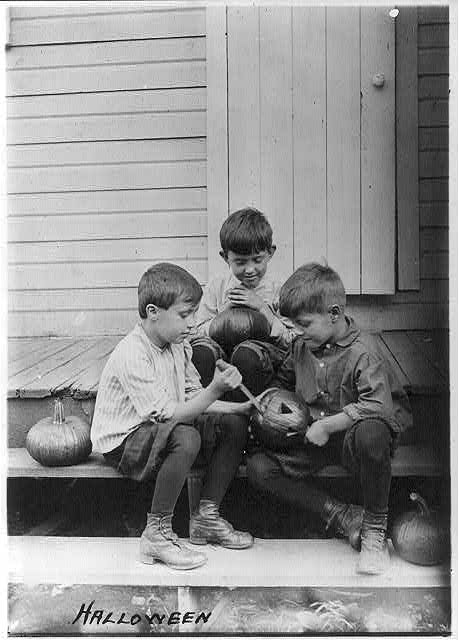
One of my favorite parts of Halloween has to be the pumpkin carving. Jack-o'-lantern traditions existed in Britain and Ireland before the familiar American pumpkin version. Large root vegetables such as turnips and rutabagas or swede could be hollowed and carved. Folklorist Jack Santino explains that British and Irish traditions also treated Jack-o'-Lanterns as a supernatural figure or spirit, not merely the name of a carved vegetable. Numerous folk tales exist about Jack and there is not a single canonical Stingy Jack story. Variants typically involve a trickster figure outwitting the Devil. In one traditional version related by Santino, Jack is ultimately denied both Heaven and Hell and condemned to wander. This wandering supernatural figure became associated with a lantern or light. Pumpkins are native to the Americas and in North America, pumpkins provided a much larger carving material than European turnips and rutabagas. The pumpkin eventually became the dominant American jack-o'-lantern. By 1917, American photographs clearly documented children carving faces into pumpkins.
It wouldn't be Halloween if there wasn't a little mischief. Halloween developed a significant American reputation for pranks and mischief. Some activity went considerably beyond harmless practical jokes though. Vandalism became enough of a problem that communities sought ways to redirect Halloween activity. Home parties and later organized community celebrations offered controlled alternatives. This is important to the development of modern Halloween because trick-or-treating wasn't simply invented as a candy delivery tradition. The emergence of organized children's Halloween activities also helped transform Halloween from a potentially disruptive night into a more structured neighborhood celebration. The Smithsonian notes that public pranks and vandalism were a problem during earlier American Halloween celebrations. Community oriented celebrations became increasingly important during the 1940s and 1950s.
Of course we can't talk about Halloween without the trick-or-treating. Door to door trick-or-treating became increasingly common in the United States during the 20th century. The Smithsonian notes that early American Halloween celebrations in the late 1800s were not primarily the door to door candy ritual familiar today. Early 20th century Halloween was much more centered on parties. The Smithsonian places major growth in modern trick-or-treating around the 1940s and 1950s, alongside increasingly community focused celebrations. The post WWII baby boom helped increase the importance of children's Halloween activities; Smithsonian's history of early 20th century Halloween contrasts its party culture with trick-or-treating's later postwar popularity. Early trick-or-treaters weren't always guaranteed candy though. Possible treats included cookies, cake, popcorn balls, apples, coins and small trinkets. Some children might be invited inside for food or Halloween games. Which is kind of creepy if you think about it. This is substantially different from today's quick exchange at the front door.
Individually wrapped candy wasn't always the standard Halloween treat. Mass produced packaged food became increasingly common during the early to mid 20th century. Candy manufacturers recognized Halloween as a major commercial opportunity and beginning in the 1950s, more candy companies deliberately targeted Halloween. Mars was among the early companies promoting candy specifically for trick-or-treating. The Smithsonian identifies a 1954 Life magazine Milky Way advertisement using Halloween and ghost imagery. Prewrapped candy had several advantages; no preparation, inexpensive in quantity, convenient for increasing numbers of trick-or-treaters and recognizable commercial brands. Homemade treats continued alongside commercial candy for years but during the 1970s, growing fears about homemade Halloween food contributed to parents preferring sealed, recognizable packaged products. This transition helped produce the modern expectation that Halloween equals individually wrapped candy.
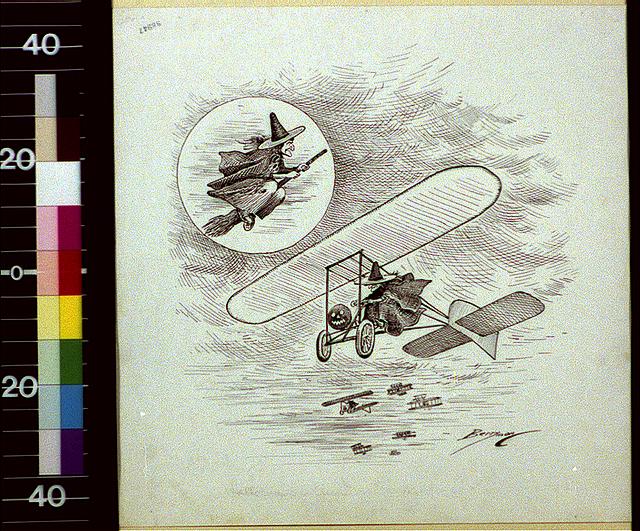
Aside from the candy, by the early to mid 20th century, many recognizable pieces had finally converged like; October 31st, ghosts and supernatural imagery, witches, black cats, jack-o'-lanterns, costumes, parties, mischief, children, door to door visiting, treats and increasing commercialization. But these pieces did not all originate together. They arrived from different periods and traditions. Witch imagery became strongly associated with Halloween and historical American newspapers even routinely used witches in Halloween artwork. By the early 1900s witches were already recognizable Halloween symbols. The Smithsonian notes witches alongside black cats and jack-o'-lanterns in early 20th century Halloween imagery. Black cats' ominous associations predate modern Halloween. The Library of Congress connects their sinister European reputation with medieval associations between black cats and the Devil and later beliefs about witches' familiars. Those associations helped make the black cat an obvious addition to Halloween's witch imagery.
As much as I love carving pumpkins and trick-or-treating and costumes, I love Horror even more. Halloween continued changing after trick-or-treating became established. The later 20th century increasingly associated Halloween with horror as entertainment. Horror films helped reshape the holiday's visual identity. Nicholas Rogers devotes an entire section of his history to "Halloween Goes to Hollywood." Modern Halloween consequently emphasizes monsters, killers, gore, haunted attractions and horror films considerably more than many early 20th century celebrations did. Compare that with the Smithsonian's description of early 1900s Halloween, where romance, courtship, and fortune telling were central. This is a powerful illustration of how Halloween can change while still being recognized as Halloween.
So what can we conclude from all of this information about Halloween? There is no single origin point for modern Halloween. Samhain is important, but Halloween isn't simply Samhain renamed. Christianity isn't merely something pasted on top of an unchanged pagan festival either. Hallowtide contributed significantly to Halloween's development. British and Irish folk traditions contributed supernatural beliefs, guising, divination, seasonal customs and jack-o'-lantern traditions. Immigration transported and transformed those traditions in North America. America added or greatly expanded mass community celebrations, children's trick-or-treating, pumpkin jack-o'-lanterns, packaged candy, commercial costumes and decorations and eventually the enormous horror component. Halloween changed from generation to generation. What survived throughout many of those transformations was the idea of October 31st as a night outside ordinary life, a night associated with disguise, inversion, uncertainty, darkness and the supernatural. Rogers characterizes this quality as a form of temporary inversion in which normal social rules can be turned upside down.
Simply put to answer "Where did Halloween come from?" Not one place, religion, culture or century. Modern Halloween is a historical accumulation and I think that is what makes it so special.
Happy Halloween and stay spooky.
Sources
- Nicholas Rogers — Halloween: From Pagan Ritual to Party Night, Oxford University Press
- Library of Congress — Origins of Halloween Traditions
- Oxford — Samhain and the Celtic Origins of Halloween
- Oxford — Festive Rites: Halloween in the British Isles
- Library of Congress — Today in History: October 31
- Smithsonian — The New Woman Meets the Old Witch
- Library of Congress — Halloween in Chronicling America
- Oxford — Coming Over: Halloween in North America
- Library of Congress / American Folklife Center — Jack-o'-Lantern discussion and transcript
- Smithsonian — Homemade Halloween Treats to Packaged Candies
- Smithsonian — From Homemade Halloween Treats to Colorfully Packaged Candies
- Library of Congress — Halloween — Ancient and Modern